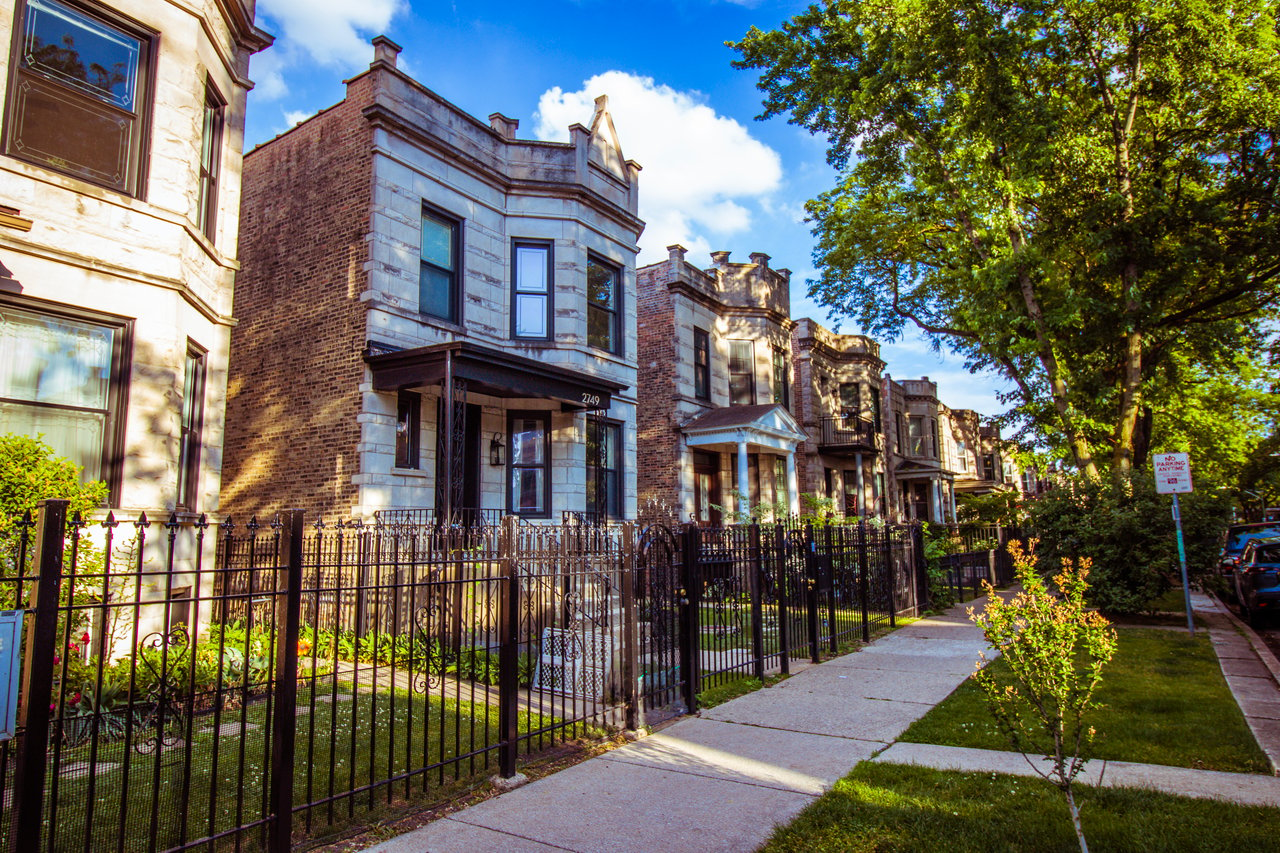
This is a guide to the vintage heart of Logan Square — the two- and three-flats and the greystones that line the boulevards. It’s deliberately not about everything in the neighborhood. Logan Square also has a growing stock of new-construction condos and homes, which I’ll cover separately another time. The masonry buildings built a century ago are what give Logan Square its identity and its best opportunities, and they come with a specific set of rules and risks that most buyers don’t know to look for.
I work in Logan Square often, and a lot of the rules around what you can do with a property here have changed. Whether you can deconvert a two-flat, how long a tenant-occupied sale takes, what a teardown costs — over the last two years the city rewrote all of it, and it varies block by block. If you are planning to buy a multi-unit in the neighborhood, we need to discuss what your plans are with it before we start your search.
The two-flat is one of the building types that defines Logan Square
Logan Square is full of Chicago’s classic two- and three-flats — one apartment per floor, brick or greystone facade, most built between 1900 and 1930. People do three different things with them, and which one you’re doing should drive your whole search.
It’s worth saying why these buildings have such a hold on people in the first place, because the appeal is real and it’s not nostalgia. These are quality builds that have stood the test of time — high ceilings, wide layouts, separate formal dining rooms, great floor plans. The masonry and the vintage detail (original woodwork, leaded glass, carved greystone facades) simply aren’t replicated in new construction at any reasonable price. On the practical side, the two-flat gives you flexibility most homes don’t: income from a tenant, space for extended family, or a unit you can grow into. These buildings have also stayed in demand through decades of Chicago market cycles, which is part of why they keep drawing buyers. The catch is that all of that upside comes attached to the specifics below, which is exactly why the building you’re looking at matters more than the block.
The first is house-hacking: buy a two- to four-unit building, live in one unit, rent the others. The reason this works so well here is financing. You can often buy a 2–4 unit as an owner-occupant rather than an investor, which means a lower down payment than a pure investment loan, and lenders will let you count a portion of the projected rent toward what you qualify for. That’s how a lot of buyers get into a neighborhood they otherwise couldn’t afford — the tenant helps carry the mortgage, and you end up holding a larger asset than you could otherwise swing. It’s how I got started myself, and it’s still the move I point first-time buyers toward more than any other.
The second is straight investment: hold the building, rent all the units, and let Logan Square’s steady demand do the work. For that buyer the whole game is the numbers, which start with whether every unit is legal — more on that below.
The third, historically, was the deconversion play: buy a tired two- or three-flat and turn it back into one large single-family home worth more than the sum of its rented parts. That move built a lot of wealth in Logan Square over the last couple decades. It’s also the one the city has spent the last two years deliberately restricting, and it now comes with an asterisk big enough to need its own section.
Worth saying clearly, because it corrects a common misread: plenty of Logan Square greystones are simply single-family homes — some built that way, many converted years ago — and they’re worth buying as houses in their own right, not just as deconversion projects. If that’s what you’re after, the vintage-building guidance below still applies to you; you’re just comparing greystones to other greystones rather than running the two-flat math.
The basement or attic unit might not be legal — check before you count on it
Here’s an open secret about Chicago two-flats: a lot of them are quietly operating as three. There’s a garden or basement apartment, or a coach house off the alley, pulling rent — and more often than not, that extra unit was never permitted as a legal dwelling unit. This is common across the city, not unique to Logan Square, and the rules are actively shifting: the state and city have been moving to legalize many of these spaces through new ADU programs.
What matters for you as a buyer is how it affects the deal — and what you’re taking on. An appraiser only counts legal units, so income from a non-conforming unit may not support your price, and lenders and insurers treat a legal two-flat differently from one with an unpermitted third unit. The rent you’re counting on may not be rent the bank is counting on.
And once you own it, the non-conforming unit is your exposure. City enforcement here is usually complaint-driven — a neighbor, a disgruntled tenant, a permit pulled for other work — so in practice it rarely comes up, but “rarely” isn’t “never,” and if it does, you can be looking at fines, losing the unit’s income, or being ordered to de-convert. Insurance is the quieter risk: a claim involving an unpermitted unit can get complicated. None of this makes a two-flat with a garden unit a bad buy — it’s one of the most common situations in Chicago — but it should be priced as what it is, not as a clean legal three-unit. Before you bank on that income, we check the certificate of occupancy and zoning to see what’s actually legal, and weigh it honestly. You want to know what you’re buying before you offer.
The Northwest Side Housing Preservation Ordinance changed the process and risk
If you’re buying, selling, or investing in a Logan Square two- to four-flat, this is the thing to understand, because it’s the biggest change to this market in years. The Northwest Side Housing Preservation Ordinance — passed in September 2024, with its tenant-purchase piece effective March 1, 2025 — covers Logan Square along with Avondale, Hermosa, Humboldt Park, West Town, and Pilsen, and it’s aimed at preserving the small multi-unit buildings that serve as naturally occurring affordable housing. It expanded an earlier set of “606” preservation rules to a roughly six-square-mile area, and it does three things that affect your transaction.
First, the demolition surcharge. Tearing down a house or a two-flat in the covered area now runs $60,000, up from $15,000, and for larger multi-unit buildings it’s $20,000 per dwelling unit — so a four-flat is $80,000, and the math gets serious fast on anything bigger. The surcharge applies even to affordable-housing demolitions and is on the books through the end of 2029. If your plan involved a teardown, it’s now a major line item.
Second, the deconversion limit, which is the big one if you were picturing buying a flat and turning it into a single-family home. On blocks inside the district that are mostly two-flats or larger, the two-flat is now the minimum — you can’t convert down to a single-family. The old Logan Square wealth move of deconverting a flat is off the table on a lot of blocks now. Which blocks qualify comes down to the exact zoning and what sits on the block face, so it’s something we check on a specific property before you build any plan around it. The same rules cut the other way too. If you’re looking to add a unit rather than remove one, the city has been moving in your direction: the district lowered the lot-area requirement so a two-flat is allowed by right on many standard lots, and separately, the ADU program has opened a path to add or legalize accessory units — a coach house, a unit over the garage, an in-law or garden apartment — without tearing anything down. In practice that second route is the realistic one for most single-family lots: you’re adding space to what’s there, not replacing the building. Whether a specific property qualifies comes down to its location and zoning, so confirm before you count on it.
Third, and something that needs to be discussed in a louder fashion: tenants now have a right of first refusal. Under the Tenant Opportunity to Purchase program, if you’re selling a tenant-occupied rental building in the covered area, you have to give notice to your tenants and the Department of Housing before you list — at least 30 days for buildings of four or fewer units, 60 for five or more — and once you accept a third-party offer, your tenants get a window to match it and buy the building themselves. The practical effect is real: selling a tenant-occupied flat here involves a notice-and-response process a normal sale doesn’t, and it can add meaningful time to your timeline. If you’re buying one of these buildings, that same process can sit between your accepted offer and a clear path to closing.
Here’s roughly how it runs for a typical two- to four-flat. After you accept a third-party offer, your tenants get a short window to exercise their right to buy — generally 15 days for one or two units, 30 for three or four — and to exercise it they have to come with a lender pre-approval, not just interest. If they exercise, they get up to 60 days to close on the same terms as your buyer’s offer. In practice, your sale moves ahead one of a few ways: the tenants waive the right (you can’t require that, but they can voluntarily sign the city’s waiver form), they let the window lapse, or they exercise but can’t line up financing in time. In fact, most sellers here line up a signed waiver from their tenants before they ever list. The part that catches buyers is separate and comes later: even after a clean third-party closing, the new owner generally has to let existing tenants stay at their current terms for at least six months or until their lease ends, whichever is longer. So a clean purchase doesn’t guarantee a vacant building on day one, which matters a lot if you were planning to move in or start a renovation.
None of this makes Logan Square a bad place to buy a two-flat — the rental demand and the housing stock are still excellent. It does mean the deconversion exit a lot of people still picture isn’t a given, and that selling or buying a tenant-occupied building takes more planning than it used to. It’s a pilot running through 2029, the details are specific, and they’ve already been amended once, so on any particular building we confirm current status rather than assume.
What you inherit with a 100-year-old building
The masonry homes that give Logan Square its character were built between roughly 1880 and 1930, and a beautiful greystone facade is also a long-term maintenance line you’re taking on. A few things I always have buyers look at in a vintage building here.
The facade and tuckpointing first. Greystone and brick are gorgeous and expensive to repair correctly — significant masonry work runs into five figures fast, and it isn’t optional when it’s needed. Then the systems: many of these buildings still have original knob-and-tube wiring or galvanized plumbing, and plenty have boiler-and-radiator heat with no central air, which is a real cost to add. Foundations and settling matter in buildings this old, so the inspection earns its fee. And parking is its own Logan Square quirk — many vintage homes have only a pad off the alley or no off-street parking at all, and on the boulevards, street parking is a genuine consideration.
One more wrinkle if character is the whole reason you’re buying: the Logan Square Boulevards District is a designated Chicago Landmark, and for homes inside it, exterior changes can be subject to review. That’s protective if you love the streetscape and a constraint if you’re planning to change windows or the facade. Worth knowing whether a specific home sits inside the district before you make plans for it.
Don’t price off a “neighborhood median”
If you look up Logan Square home values, you’ll routinely find two “median” numbers well over a hundred thousand dollars apart, and the usual hand-wave — “different methodologies” — misses what’s really going on. The gap is the product mix. A median sale price gets pulled up by renovated single-family greystones and new construction at the top of the market, while a broad typical-home value index includes all the vintage condos and smaller units at the other end. Both numbers are real. Neither describes your specific property.
That’s the practical point for buyers and sellers both: in a neighborhood with this much spread between product types, a blended median is close to useless for pricing. You price a two-flat against other two-flats (typically within a small radius, a half mile), a single-family greystone against other greystones, a vintage condo against other vintage condos. The neighborhood number is a headline; your product type is the actual comp set. It’s the most common pricing mistake I see here, on both sides of the deal.
So where does that leave you
If you’re buying a two-flat to live in and rent, the search starts with financing and the legal unit count, and you’ll want to know whether the building sits in the ordinance area before you plan anything beyond holding it. If you’re buying a single-family greystone, you’re mostly in vintage-building-condition territory — facade, systems, parking, landmark status. And if you’re investing, the two-flat math, the legal units, and the tenant-purchase and deconversion rules are the entire conversation.
Logan Square rewards knowing the specifics, because here the specifics are unusually consequential. In this neighborhood, understanding the rules attached to a building is often as important as understanding the building itself — the same purchase price can buy very different opportunities, risks, and timelines. That’s why I spend so much time helping buyers understand exactly what they’re buying before they’re under contract. If you’re weighing a two-flat or a greystone here, I’m happy to walk through which product type fits your goals and what to confirm before you offer. A little of that upfront tends to save a lot of trouble later.
Frequently Asked Questions
Can I buy a Logan Square two-flat, live in one unit, and rent the other?
Yes, and it’s one of the best reasons to buy here. As an owner-occupant of a 2–4 unit building you can often use lower-down-payment financing than an investor would, and lenders will usually let you count some of the projected rent toward qualifying, so the tenant helps carry the mortgage. Just confirm every unit you’re counting on is a legal unit before you rely on that income.
Can I still convert a Logan Square two-flat into a single-family home?
Often, no. Under the Northwest Side Housing Preservation Ordinance, on blocks inside the district that are mostly two-flats or larger, the two-flat is the minimum house size — you can’t convert down to a single-family. And tearing one down is expensive now: $60,000 for a house or two-flat, $20,000 per unit for larger buildings. Whether a specific property is affected depends on its exact block and zoning, so it has to be checked before you plan a deconversion.
What is the Tenant Opportunity to Purchase, and does it affect me?
It’s a tenant right of first refusal that applies when you sell a tenant-occupied rental building in the covered Northwest Side area, including Logan Square. You have to notify your tenants and the Department of Housing before listing (at least 30 days for four units or fewer, 60 for five or more), and when you accept a third-party offer, your tenants get a window to match it and buy the building themselves — generally 15 days to exercise for one or two units, 30 for three or four, then up to 60 days to close. To exercise, tenants need a lender pre-approval, and the cleanest path to selling your own buyer is usually a voluntary tenant waiver — which you can’t require, but tenants can sign, and most sellers line one up before listing. And even when tenants pass and a third-party buyer closes, that buyer usually has to let existing tenants stay at their current terms for at least six months or until their lease ends — so plan for that if you intend to move in or renovate.
Why are the two “median price” numbers for Logan Square so different?
Because the neighborhood has such a wide mix of property types. A median sale price gets pulled up by renovated single-family homes and new construction, while a broad home-value index includes all the smaller condos and units. Both are accurate; neither describes any one home. Price your specific property against its own product type, not the blended number.
What should I watch for in a vintage two-flat or greystone?
The masonry facade and tuckpointing (expensive to repair when needed), original knob-and-tube wiring or galvanized plumbing, foundation condition, wet basements. If the home is in the Boulevards landmark district, exterior changes may also be subject to review.
Is Logan Square a good place to invest in a two- to four-flat?
It can be, largely because of the housing stock and steady rental demand. The things that make or break a deal here are whether all the units are legal and how the Northwest Side Housing Preservation Ordinance — the deconversion limits and the tenant right of first refusal — affects your plans. All of it is checkable