Why I Turned My Courtyard Into a Native Plant Habitat
My house is a strange one, even by Chicago standards. It's a rowhome shaped like a sharp-cornered U, and I share the back middle wall of the U with my neighbor. Between our two homes sits a courtyard, and when I moved in, that courtyard was nothing but gravel.
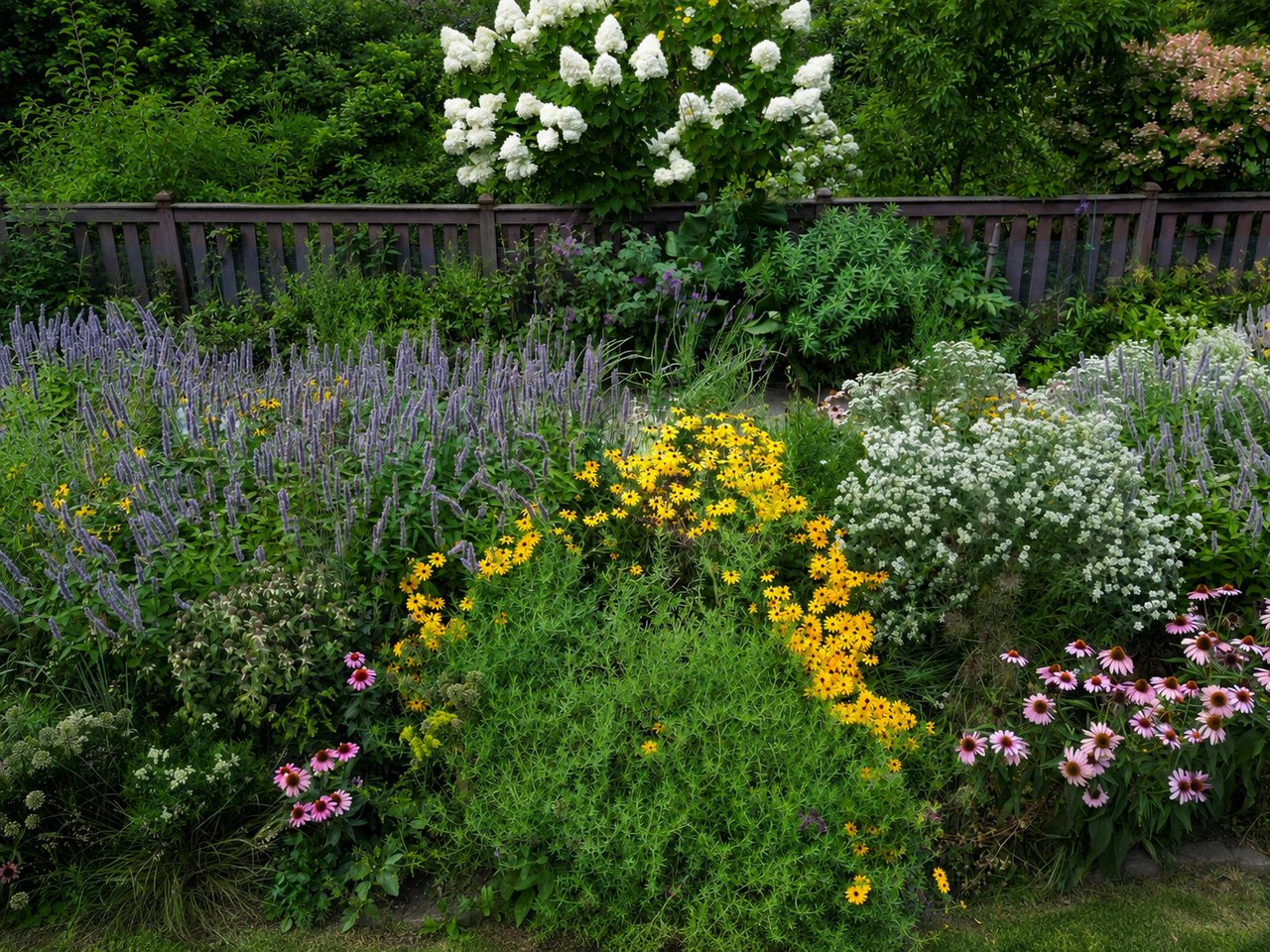
Today it's a native plant sanctuary. If you stood in it right now, you'd see bees on nearly every flower, monarchs and swallowtails drifting through, and at dusk, fireflies. Everyone keeps saying the fireflies are disappearing. Not at my house. My friends joke that my backyard is a Snow White situation, and they're not wrong. I've made friends with a squirrel who takes peanuts from my hand, and my friends make fun of me for how often I say "I have so many birds." I do, though. I have so many birds.
None of this is an accident. Over the past three years I converted the courtyard, then my front parkway, then most of my backyard into native habitat, and this is what showed up.
The Prairie State, minus the prairie
I grew up near a marsh and a prairie, surrounded by butterflies, toads, and fireflies. Somewhere along the way, most of that quietly went missing. Illinois is called the Prairie State, but we've destroyed 99.99% of our original prairie. What's left survives in slivers: forest preserve remnants, restoration projects, and increasingly, people's yards.
That last part is the interesting one. When I planted my garden, it was one thing on my block. Now I notice native plantings constantly on showings, in parkways, in front yards across the city. A purple coneflower where a strip of struggling grass used to be. It's not a niche hobby anymore. It's a movement, and Chicago just made it officially easier to join.
The new parkway rules
This spring, City Council unanimously changed the rules for parkway gardens. For years, anything in your parkway over 10 inches tall could technically get you ticketed as a weed violation (happened twice to me 😊 ), which ruled out most native plants, including milkweed, the one plant monarch caterpillars need to survive. Now, if you sign your garden up for the city's Native and Pollinator Garden Registry, plants up to 36 inches are allowed.
The registry takes an application (photos, a plant list, a maintenance plan), and there are sensible rules about keeping sidewalks and hydrants clear. But the message from the city is a real shift: native parkway gardens aren't weeds, they're an asset. Chicago's motto has been Urbs in Horto, City in a Garden, since 1837. The parkways are finally included. I've already converted my own, and it hums in July in a way the old strip of grass never did. The parkway is the worst real estate on any lot, unwatered, salted all winter, visited by every dog in the neighborhood, and natives are the plants actually built to handle it.
I am not a gardener, and that's the point
Here's the deal: I did not research any of this. I'm not the person who's going to spend weekends on plant forums figuring out which species needs which light. I reached out to Christy Webber Farm & Garden (Now Tallgrass Garden) in Humboldt Park, and they connected me with Cooper Forsman, who runs their native plant department. Cooper came to my house, looked at my odd U-shaped courtyard, and put together a plan I never could have assembled myself: sedges and wild strawberry as groundcover, ferns and wild columbine for the shady spots, milkweed and wild bergamot for the pollinators. The first order alone was 147 plants, plus two books about prairies. On the order sheet, they'd named the whole project "Romolo Horseshoe." I'd been procrastinating for years, and one phone call made it easy.
Three years in, I have favorites I didn't know existed when we started: Culver's root, goat's beard, echinacea, and a Baptisia called Honey Roasted, which sounds like a snack and blooms in yellow and maroon like nothing else in the garden.
I interviewed Cooper last year for a segment for ADTV, and one thing he said stuck with me: native plants are the basis of the whole ecosystem. They're what turns sunlight into food for everything else, and many of our native insects are specialists that can't use anything else. Monarchs and milkweed are the famous example, and the reason there's common milkweed in my garden, but there are hundreds of these relationships, built over thousands of years. A yard full of imported ornamentals might look nice, but ecologically it's mostly a food desert.
The practical selling points, though, are what got me to actually do it. Natives are perennials, so they come back every year. Once established, they're low maintenance and drought tolerant. And they're beautiful in a way I didn't appreciate growing up here, wilder and looser than the exotic showstoppers I used to fill my planters with. I haven't gone purist, for the record. My backyard is heavy on natives now but mixed with other pollinator-friendly plants, and the planters still get the showy stuff. The habitat doesn't seem to mind.
The basement flooding part
Of course I have to talk about real estate for one paragraph. Native plants have deep roots, some reaching several feet down, and they soak up stormwater like a sponge instead of letting it sheet off into Chicago's combined sewer system. If you've lived here through a July downpour, you know exactly why that matters. Basement flooding is one of the most common issues I deal with in transactions, and yards that are all concrete pad or compacted turf send every drop of rain toward the foundation. A planted yard, especially a native one, is genuinely part of your home's water management. It's one of the few home improvements that's beautiful, cheap, and functional at the same time.
You don't need a yard, or experience
For the ADTV episode I also visited Scott Gerwitz in Belmont Cragin, who just won Best Pollinator Garden in the Chicago Bungalow Association's annual garden contest. Scott had never gardened before 2020. He ripped out his parkway grass during the pandemic, planted native roots he ordered from a Wisconsin nursery, and five years later his garden is award-winning and full of bees, monarchs, and the occasional hummingbird. A beekeeper friend six blocks away tells him his bees commute to Scott's flowers.
Two things I took from Cooper and Scott both. First, right plant, right place: match the plant to your conditions and it will thrive without much help from you. Second, plant densely. Prairie plants evolved packed together, and when you plant them close, they suppress weeds and hold each other up. The sparse-plants-in-a-sea-of-mulch look is where native gardens go wrong.
And if all you have is a balcony, one pot of coneflowers still counts. The pollinators will find it.
My garden is in its third year, which is when everything supposedly fills in, and it's true. Year one looked kind of … meh. My neighbor asked what I was doing. Now on year three my yard, courtyard and parkway are honestly impressive. I love spending my days out there.
You can watch my full conversations with Cooper and Scott on ADTV / Chicago Stories & Interviews.
FAQ
Are native plant gardens legal in Chicago parkways?
Yes. As of May 2026, plants up to 36 inches tall are allowed in parkway gardens that are enrolled in the city's Native and Pollinator Garden Registry. You apply through the city with photos, a plant list, and a maintenance plan. Unregistered parkways are still subject to the old 10-inch rule, so if you're planting tall natives out front, get on the registry.
Do native plants actually help with basement flooding?
They help. Deep-rooted native plants absorb stormwater that would otherwise run toward your foundation or into the sewer system. They won't fix a bad grading problem or failing drain tile, but replacing concrete or compacted lawn with planted beds is one of the most effective passive things a homeowner can do about water.
Will a native garden hurt my curb appeal when I sell?
A maintained one, no. I'm seeing native landscaping on more and more showings, and buyers increasingly read it as a feature, especially younger buyers. The key word is maintained: dense, deliberate planting with clean edges reads as a garden. Sparse plants flopping over the sidewalk read as neglect. Design matters more than plant origin.
How do I start a native garden in Chicago if I know nothing about plants?
Do what I did and get help. Christy Webber Farm & Garden offers native plant consultations, and Cooper will come to your house and plan it with you. The Morton Arboretum and Chicago Botanic Garden both have excellent free resources, and the Chicago gardening communities on Reddit and Facebook are surprisingly generous with advice.
Are native gardens really low maintenance?
After the first year or two, yes. They're perennials adapted to Chicago's climate, so no replanting, minimal watering once established, and no fertilizer. The main work is early: planting densely enough and keeping weeds down while things fill in. By year three, the garden mostly runs itself.