Living in the West Loop: A Guide From Someone Who Actually Lives Here
Most West Loop neighborhood guides are written by people who have never been here. You can tell, because they all say the same three things: it used to be a meatpacking district, it has a lot of restaurants, and the Blue Line runs 24 hours. All true. None of it tells you whether you should actually live here.
I live in the West Loop. I've also spent twelve-plus years selling real estate across Chicago, which means I've walked buyers through most of the loft buildings in this neighborhood and sat through more than a few of their condo board minutes. So this is the version of the guide I'd give a friend.
What it's actually like to live here
The West Loop is the city's food and drinks hub and one of the most convenient places to live in Chicago. It can also be loud — but only in spots, and knowing which spots is most of the battle.
If you're on or right off Randolph, you're living above one of the best restaurant strips in the country, which also means valet stands, weekend crowds, and garbage trucks servicing forty kitchens before sunrise. People who love it here make peace with that trade immediately. People who don't usually figure it out around month three. The fix is simple: buy a block or two off the corridors. The neighborhood gets quiet surprisingly fast once you're off Randolph, Fulton, and Madison — the residential side streets feel almost suburban by comparison, in a way that surprises every buyer I walk them.
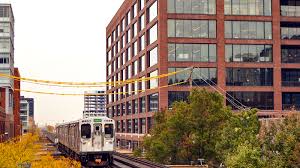
Day to day, the convenience is real and not just marketing copy. Groceries, gyms, coffee, the Loop on foot, two Metra hubs and three CTA lines within a reasonable walk, O'Hare without a car. I know people here who've gone years without owning one. The United Center is the one caveat — if you're on the far west end, Madison on a Bulls or concert night is its own weather system. Plan around it or embrace it.
The housing stock, honestly
The West Loop is mostly lofts and condos, but there are more townhomes here than people assume — a decent number tucked along the side streets and in the pockets near Skinner Park, plus a handful of true rowhomes. There just isn't a ton of any of it, and what exists trades fast. If you have your heart set on a townhome, it's doable; just build patience into the timeline.
The more useful distinction nobody explains: timber lofts vs. concrete lofts. Timber lofts are the authentic conversions — exposed brick, heavy wood beams, the character everyone pictures when they say "West Loop loft." They're beautiful and they're also acoustically honest, meaning you will know your upstairs neighbor's schedule. Concrete lofts give you the high ceilings and big windows with actual sound separation between floors. Neither is better; they're different products at different price points, and buyers who don't know the difference walking in always know it walking out.
Then there's the new construction tier — the full-amenity buildings in and around Fulton Market. Gorgeous, turnkey, and carrying assessments to match: doorman, gym, and amenity floors aren't free, and monthly dues in those buildings can run double or triple what a self-managed loft building charges. Neither number is wrong. You're just deciding whether you want to pay for amenities every month forever.
One more Fulton Market reality check: a lot of the shiny new towers north of Lake are rentals, not condos. The for-sale inventory up there is thinner than the construction cranes suggest.
What the prices actually mean
The median sale price in the West Loop floats around the high $400s to low $500s depending on the month, against a citywide median of $345,000. On a price-per-square-foot basis the gap is starker — roughly $400 a foot here versus the mid-$200s citywide.
But the median is close to meaningless in this neighborhood, because the market is a barbell. On one end: one-bedroom lofts in older conversions that you can still get in the $300s. On the other: new-construction luxury condos running well past $1 million, with the top of the market stretching into the multiple millions. The "typical" West Loop home the median describes barely exists. What exists is a question: which end of the barbell are you shopping?
The things nobody puts in the brochure
Parking. Deeded spots here routinely run $25,000–$50,000 on top of the unit, and plenty of older loft buildings have no parking at all, or leased spots in a lot the building doesn't control. A unit with deeded parking is worth real money at resale; a unit without it shrinks your future buyer pool. I'd rather see a client buy the slightly worse unit with the deeded spot than the reverse.
Property taxes on new construction. That attractive tax bill on the listing sheet for a new build is often based on the land before the building existed. Cook County will catch up, and the reassessed bill can be a multiple of what you saw at closing. Always underwrite the projected assessment, not the seller's current bill. This catches more first-time new-construction buyers than anything else.
Condo rental caps. If there's any chance you'll want to rent your unit out later — job change, upsizing, keeping it as an investment — check the building's rental policy before you offer, not after. Plenty of West Loop associations cap the percentage of rented units or require owner-occupancy waiting periods, and a building at its cap turns your exit plan into a waitlist.
Schools. Skinner West is a great school — one of the most sought-after elementaries in the city — and proximity is not enrollment. The attendance boundary is address-specific and units inside it carry a real premium, so it's worth verifying the boundary on the exact address before you fall in love with anything. The neighborhood is also home to Whitney Young Magnet High School, which is selective enrollment — testing, not address, is what gets you in.
Who should buy here — and who shouldn't
Buy here if you want your life within a fifteen-minute walk: dinner, transit, the Loop, the lakefront a short ride away. Buy here if loft character or full-amenity convenience is the point, and you'd rather have location than square footage.
Look elsewhere if you want a yard, a quiet block by 9pm, a driveway, and a basement. Those buyers exist in my client list too, and I send them to Portage Park and Lincoln Square and they're happy. The West Loop isn't trying to be that, and the buyers who struggle here are usually the ones who hoped it secretly was.
If you're weighing the West Loop against another neighborhood — or trying to figure out which building on a given block is the good conversion and which one is the lawsuit waiting to happen — that's exactly the conversation I like having. Reach out and we'll look at it together.
FAQs
Is the West Loop expensive compared to the rest of Chicago? It is. You're paying roughly $400 a square foot here versus the mid-$200s citywide. But the market is a barbell — you can still get into an older loft in the $300s on one end, and new construction runs well into seven figures on the other. The "average" price doesn't describe much of anything you'd actually buy.
What's the difference between a timber loft and a concrete loft? Timber lofts are the original brick-and-beam conversions — all the character, none of the soundproofing. Concrete lofts give up some of that warmth for actual sound separation between floors. There's no right answer here, but you should know which one you're touring before you tour it.
Do I need a car in the West Loop? Honestly, no. Between the Green, Pink, and Blue Lines, two Metra hubs, and being able to walk to the Loop, plenty of people here live happily car-free. If you're keeping one, budget $25K–$50K for a deeded spot — and when you're buying, prioritize buildings that have them. Your future buyer will thank you.
What are the schools like in the West Loop? Skinner West is one of the most sought-after elementary schools in the city, and the neighborhood is also home to Whitney Young Magnet High School. Two things to know: Skinner's attendance boundary is address-specific (verify it before you offer, not after), and Whitney Young is selective enrollment, so testing — not your address — is what gets you in.
What should I watch out for when buying new construction here? The property tax bill. New builds are often taxed on the pre-construction land value at closing, and the real number shows up a year or two later. Underwrite the projected assessment, not what's on the listing sheet — this one catches more buyers than anything else in the neighborhood.