For a long time, I didn't get highrises. I didn't hate them — I just didn't understand why people chose them.
This is a strange thing for a Chicago agent to admit, because we have some of the best highrise housing stock in the country. But I preferred bungalows and greystones and walk-up condo buildings. I preferred yards, gangways, back porches — buildings you can walk around. And above all, for most of my career, I preferred historic homes — crown molding, woodwork, separated rooms and spaces. Highrises read as the opposite: too polished, no detail, boring, no privacy, and expensive for no reason I could see.
That was my position for a while, and then it started to change.
It happened gradually — here and there I'd catch myself appreciating the floor-to-ceiling windows, a genuinely functional floor plan, the views. But the building that finished the job was in the Gold Coast.
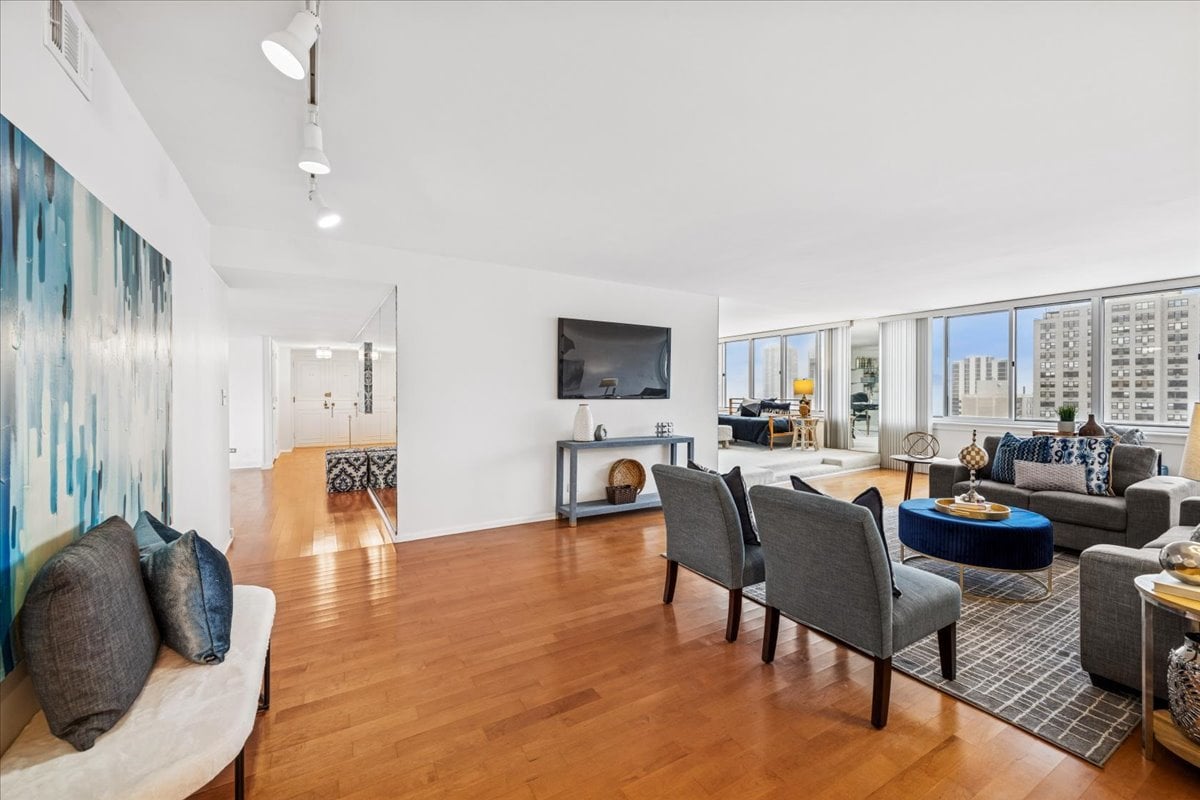
I walked in expecting to do what I always do in highrises, which is look at the place through my clients' eyes and needs instead of my own. Instead, I walked in and was completely enamored. It was a full-floor unit: unobstructed views, a wide floor plan, separated spaces that still flowed together, and so much light. When the whole home lives on one floor, there's no stairwell or second story in the way — the sun comes in from every direction. I told my clients it felt like a sprawling ranch home in the sky.
2,000+ square feet in a single family home in this city feels different than a 2,000-square-foot full-floor condo, because in the condo, basically all of that square footage is functional living space. I like homes with separate floors — you can have your own space away from whoever you live with when you need it — but a sprawling condo feels so grand.
The funny thing is that the highrises I've fallen hardest for are midcentury — which means I never really left vintage at all (though my clients are currently buying a very modern condo at 900 West Washington in the West Loop, which I have also seriously fallen in love with). I love the Mies van der Rohe buildings at 900 N Lake Shore. I adore the south-facing units at 2800 N Lake Shore, which I'd argue have the best view in the city: Lincoln Park — the actual park — spread out below you, framed by the skyline behind it.
I'm not fully converted, for the record. The assessments are real money, and even when I know exactly what they cover, some of them still make me wince — and a big special assessment can land whether you saw it coming or not. You live by the building's rules: when you can renovate, what your dog can weigh, what your balcony is allowed to look like. There's usually no yard, which matters more than some people think it will. And the privacy thing hasn't fully gone away for me. In a highrise, someone greets you every time you come and go — which also means someone knows every time you come and go, and whatever might be going on in your life at that moment. You can't leave or enter without potentially having to make small talk, even when you don't feel like it.
They aren't for me at this moment in my life, but I do see why people love them — and I could definitely see myself in a sprawling ranch home in the sky somewhere down the road.
Which is something I probably wouldn't have seen ten years ago.
_____________________________________________________
Frequently Asked Questions
What are the advantages of living in a Chicago high-rise?
High-rises appeal to many buyers because they offer one-floor living, expansive views, building amenities, and a lock-and-leave lifestyle. Owners also avoid many of the maintenance responsibilities that come with single-family homes, such as exterior upkeep, snow removal, and landscaping.
What do monthly HOA assessments in a high-rise cover?
Assessments vary by building, but they often cover things like building insurance, common area maintenance, doorman service, elevators, exterior repairs, landscaping, snow removal, and amenities such as fitness centers or pools. Most highrises will also include almost all of your utilities.
What are the downsides of living in a high-rise?
The tradeoffs can include higher monthly assessments, building rules and regulations, less private outdoor space, and less privacy than a single-family home. Buyers should also understand the possibility of future special assessments and review a building's financial health before purchasing.
Which Chicago neighborhoods are known for high-rise living?
Some of Chicago's most iconic high-rises are located in the Gold Coast, Streeterville, Lincoln Park, Lakeview, and the West Loop. Each neighborhood offers a different mix of architecture, views, amenities, and lifestyle.