After twelve years and hundreds of Chicago closings, I can tell you that a lot of first time home buyers spend their energy worrying about the wrong things.
The internet is full of advice about getting pre-approved, saving for a down payment, and never skipping an inspection. All of it is great and true. But the expensive surprises I see come from somewhere else — the gap between what buyers worry about and what actually costs money.
Underneath every mistake on this list is one bigger idea, so I'll say it up front: there is no perfect house. Every home is a collection of tradeoffs — the vintage building with charm and maintenance, the new construction with low upkeep and a higher assessment, the quiet street at a premium and the busy one at a discount. Buyers who know they're choosing between tradeoffs make good decisions. Buyers hunting for a home without any tradeoffs burn out, overpay, or freeze. In my experience, even when your budget is millions of dollars, there is still homes out of your budget that you would prefer.
Here's where I see it go wrong.
Old doesn't mean broken
A 1920 building is not going to behave like a 2020 building, and it shouldn't have to.
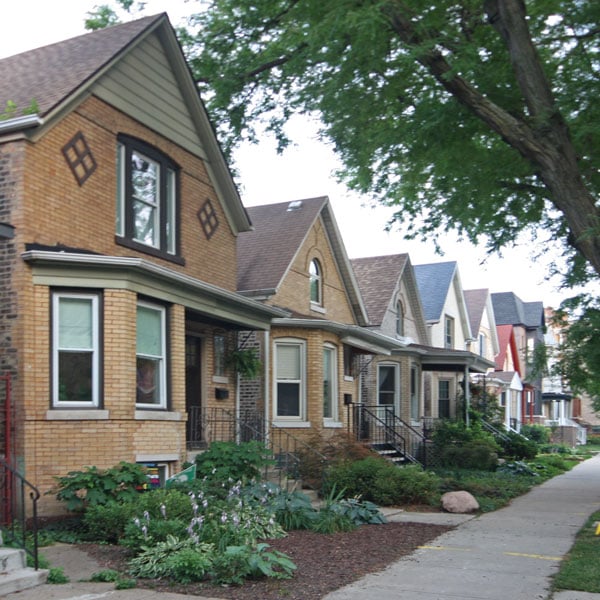
Buyers coming from new rentals or from the suburbs often walk into a century-old Chicago two-flat or vintage condo expecting perfection. Then the floors slope a little. Doors stick in winter. Radiators make noise in January. A basement built in 1915 smells like a basement. None of this is damage. It's what a masonry building does after a hundred Chicago winters. In my opinion, a lot of the old buildings are actually the best constructed.
Brick eventually needs tuckpointing. Parkway trees push up sidewalks. Alley garages age faster than houses. Those are maintenance rhythms, not defects — and a big part of my job is helping first-time home buyers tell the difference between “this is an old Chicago building” and “this is a problem.”
If you can't live with any of it, fine — you're a new-construction buyer. Shop that way instead of touring vintage homes and being disappointed by all of them.
The inspection report isn't a pass/fail test
This one cuts against everything the internet tells you. Most first-time home buyers I work with don't rush the inspection or waive it recklessly. They do the opposite: they overreact to it.
Every 100-year-old building produces a scary-looking report. Forty pages, dozens of photos, phrases like “recommend evaluation by a licensed professional” on half of them. I've watched buyers walk away from genuinely good homes over a water heater near the end of its life and a handful of ungrounded outlets — findings that are either normal for the building's age or a few hundred dollars to address.
The report isn't a grade. It's an inventory. The goal was never a clean report; the goal is understanding what you're buying and what it will cost to own.
That said, a short list of findings does deserve your full attention: evidence of structural movement, sewer line problems (scope it — clay lines are common here), active water intrusion, and major masonry work. Those are the ones I slow down for, because they're measured in tens of thousands, not hundreds. Everything else is a negotiation item or a to-do list, not a verdict.
The purchase price isn't the price
One of the conversations I have most often goes like this: a buyer is anchored hard to the list price and has barely looked at the monthly number underneath it.
In Chicago, two homes at the same price can cost very different amounts to own. A $400,000 vintage condo with a $700 monthly assessment and an underfunded reserve is more expensive than a $440,000 unit with a healthy association and a $300 assessment — before you even get to the special assessment the first building is quietly heading toward. I've seen the updated, move-in-ready unit and the dated unit in the same tier of the same building, and the dated one was the better buy once you ran the full math. Move-in ready is a real convenience. It is not automatically a savings.
Taxes deserve the same scrutiny, because in Cook County the bill you see on the listing is not the bill you'll pay. Taxes here are billed a year (+) behind, and the current bill reflects the current owner's situation, not yours. If the seller has a senior exemption, that discount leaves with them and your bill goes up. If the property has no homeowner exemption on it at all — common with investor-owned units — and you're buying it as your primary residence, your bill will actually come in somewhat lower once you claim it. Reassessments move the number again. Buyers who budget off the listed tax bill find all of this out after closing. None of it is hard to check, and almost no one checks it.
Before you fall in love with a condo, read the association's financials the same way you'd read the inspection report. I've written a full guide to [the red flags worth catching in a Chicago condo purchase], and the association section is the part I'd read twice.
What the seller paid doesn't matter
Buyers look up the seller's purchase history — everyone does — and then some of them can't unsee it. The seller bought for $290,000 six years ago and is asking $410,000, and suddenly the buyer feels like they're being asked to fund someone else's windfall.
Here's what I tell my clients: what the seller paid doesn't matter, because everyone sells their home for market value. Including you, when you sell this place.
Markets move. Renovations happen. Six years of appreciation is six years of appreciation. The seller's basis tells you about the seller's finances, not about what the home is worth today — the comps tell you that. And this cuts both ways. I've seen buyers refuse to offer fair value because the seller's profit offended them, and I've seen buyers expect a discount because the seller “bought low and can afford it.” Both lost homes over a number that had nothing to do with the property.
If you're worried about overpaying, that's the right worry — just aim it at the right target. Study the comps, not the seller's closing history.
Misreading the list price
In Chicago, a list price is a marketing decision, not an appraisal. Some homes are priced under the market on purpose to generate a crowded weekend and multiple offers. Others are priced with room built in. They look identical on your phone.
Buyers who don't know which one they're looking at make two opposite mistakes. Some spend months touring homes listed at the top of their budget in neighborhoods where everything sells over ask — falling in love, offering their maximum, losing, repeat. That's how buyers burn out. Others find a home priced with genuine room and never push, because losing twice taught them not to negotiate at all.
You can't always tell which is which from the listing alone, but most of the clues are public: days on market, whether the comps actually support the number, what the last three sales on the block did relative to their asking prices. Understanding that context is a big part of my job before we ever write an offer. When there's room, I negotiate hard. When a home is priced to spark a bidding war, I tell my buyers what it will actually sell for — and if that number is out of reach, we skip the showing and protect the weekend.
Drawing the search box too tight
Search filters are blunt instruments, and buyers treat them like laws.
A buyer capped at $500,000 never sees the listing at $515,000 that's been sitting for five weeks and will negotiate below their ceiling. A buyer who draws the boundary at one neighborhood never sees the home two blocks outside it. I have this conversation constantly in some version of “I want Logan Square but can't afford Logan Square” — and the answer is almost never to stretch the budget. It's to widen the map. The blocks just across the line often have the same housing stock, the same commute, and a meaningfully lower price, for no reason other than the name attached to them.
Set your filters ten percent wide in every direction — price, boundaries, one criterion you think is fixed — and let the actual homes tell you where the line really is.
You're the next seller
The tradeoff idea matters most right here, because some tradeoffs are permanent and some aren't.
You can gut a kitchen. You cannot move the house off a busy street, away from the train tracks, or out from behind the commercial strip it backs up to in the suburbs. Homes with those conditions trade at a discount — which is exactly why they can look like such good deals — and they will trade at that same discount when you sell. That's not a reason to never buy one. It's a reason to buy it knowingly, at a price that reflects it, instead of discovering the discount when you're the seller.
The same logic applies inside the walls. A functional floor plan holds value in a way finishes never will: bedrooms that fit actual beds, a layout where you don't walk through one room to reach another, somewhere to put a desk. I've watched buyers choose the dramatic space that photographed beautifully over the ordinary one that lived well, and regret it within a year.
None of this means you need to find your forever home on the first try. Almost nobody does, and treating the decision as permanent is its own mistake — it's how buyers freeze. Plan for five to seven years, buy something you can live in comfortably for that stretch, and make sure the next buyer will want it too. That's the whole assignment.
FAQs
What mistakes do first-time home buyers make most often in Chicago?
The pattern I see most is misplaced worry: overreacting to routine inspection findings and the seller's purchase history while ignoring carrying costs, association health, and property tax changes — the things that actually determine what a home costs to own.
Do property taxes go up after you buy a home in Chicago?
Often, yes. Cook County bills a year behind, and the current bill reflects the current owner's exemptions. A senior exemption disappears when the seller does. The one move in your favor: if the home has no homeowner exemption and you're buying it as your primary residence, your bill comes in lower once you claim it.
Should I be worried about a bad inspection report on an older Chicago home?
Not by page count. Every vintage building produces a long report. Focus on structural movement, sewer lines, active water intrusion, and major masonry — those carry real cost. Most of the rest is age-appropriate maintenance and negotiation material.
Does it matter what the seller paid for the house?
No. Everyone sells for market value — including you, eventually. The comps tell you what a home is worth; the seller's closing history tells you nothing you can use.
Is buying on a busy street in Chicago a mistake?
It's a tradeoff, not a mistake. Busy streets and train-adjacent homes sell at a discount going in and coming out. Buy one knowingly at a price that reflects it, and understand the discount follows the house when you sell.
Buying your first home in Chicago doesn't mean figuring all of this out on your own. If you're comparing condos, weighing neighborhoods, or just want a second opinion before you write an offer, that's exactly what I do with buyers every week — think through the tradeoffs, not just the list price. [Get in touch.]