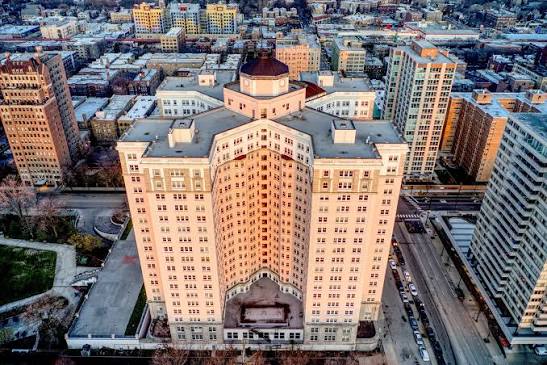
Stand at Bryn Mawr and Broadway on a Wednesday evening in August. Walk a block and a half east and there's a brunch counter that opened this spring in a dining room that sat empty for four years. Head five blocks north up Broadway and you'll pass a pizza place selling chili paneer pan pies, then a Thai storefront on Granville that didn't exist last fall. Cut west toward Ashland and there's a free concert set up in a museum garden.
If you had stood on that same corner two years ago, you would have been looking at papered windows.
That's the Edgewater story for 2026, and it's a more specific story than "the neighborhood is having a moment." A couple of years ago, dinner and a show meant driving to Andersonville or heading south into Uptown. The density is local now.
Why the storefronts emptied, and why they filled
Ald. Leni Manaa-Hoppenworth has been blunt about the cause, calling the pandemic and the Red Line construction a double whammy that left the Bryn Mawr business corridor nearly unrecognizable from the district the ward had taken for granted.
Here's the part that matters if you own something nearby. When a commercial strip sits next to a multi-year transit project, tenants leave for reasons that have nothing to do with the neighborhood — the sidewalk is torn up, the station is closed, the customers reroute. Rents drop to match. Then the work ends, and the strip refills faster than anyone expects. The location was always worth what it was worth. What dropped was the rent to get into it.
Edgewater is in the second half of that cycle right now, and it's worth being precise about what that does and doesn't tell you. A courtyard condo two blocks from a full commercial strip and one two blocks from a half-empty one are different assets. The gap between them tends to close after the strip fills rather than before.
What's opened
Restaurants turn over. Some of these will be gone in three years, and that's fine — the list is evidence that the corridor is absorbing tenants again, not a dining guide. Broadway is the spine. Bryn Mawr and Granville feed into it.
- Fried Egg Cafe, 1039 W. Bryn Mawr Ave., daily 7 a.m. to 3 p.m. It opened this spring in the Francesca's room, empty since Francesca's closed in January 2022 after 21 years. That block's ground floor was built for nine storefronts in 1927 and has spent most of the last five years short of that.
- Desi Boys Pizza, 6137 N. Broadway. South Asian–inspired pies. The chili paneer pan pizza is the one people order twice.
- Zenwich, 1124 W. Thorndale Ave., next to the Thorndale Red Line stop. Korean cheesesteaks, spicy brisket and pork belly sandwiches, gyoza, teriyaki bowls. The Elmhurst original opened in 2009.
- Kin Yum Tum Zaab, 1123 W. Granville Ave. Thai street food.
- Axum Cafe, 5842 N. Broadway. Not open yet. Solomon Birhanu has the former Mango Pickle space and is building it around the Ethiopian coffee ceremony.
Add Hamburger Mary's, Teranga, and Transistor Chicago, all open on Bryn Mawr now, and one block just east of Broadway has turned over almost entirely inside eighteen months.
What I'm seeing on showings
No buyer has ever asked me whether the storefronts on Broadway were going to fill back in. That's an owner's question. What buyers ask about is Andersonville.
It's also worth saying what filled them, because that's the part that actually signals something. A corridor can fill with whatever takes the space — that's churn, and it doesn't mean much. What Edgewater got this round were storefronts people cross the neighborhood to get to. That's a different indicator, and it's the one I'd watch.
More of my clients are landing in Edgewater after starting their search on Clark Street, and the reason isn't complicated — the money goes further and they don't feel like they gave anything up to get there. I'm also hearing Edgewater by name now from people who came in wanting Andersonville, which wasn't happening a couple of years ago.
The other thing that surprises them is the assessment. Two Edgewater condos closed in the past year about $10,000 apart in price — one on Kenmore at $139,900 with a $273 monthly assessment, one in a Sheridan Road high-rise at $130,000 with $1,064. On a search results page those are the same listing. In practice one costs about $9,500 a year more to hold, which is close to $95,000 over a ten-year hold.
That isn't an argument against the high-rise. A doorman, elevators, a garage, and a lakefront building's maintenance schedule cost what they cost, and if that's the building you want, buy it. It's an argument against sorting by price. Edgewater has one of the widest ranges of building types on the North Side, which means two units at the same number can carry monthly costs that differ more here than almost anywhere else I sell. Run the assessment and the taxes into the payment before you fall for the price.
One wrinkle specific to this stretch: some of the vintage buildings along Sheridan and Winthrop are co-ops rather than condos. They price differently, they finance differently, and the search portals don't make the distinction obvious. Ask before you get attached.
What this means if you're buying here
Edgewater isn't undiscovered anymore. I hear it asked for by name now, by people who a few years ago would have said Andersonville and stopped there. But the trade is still on the table: a few blocks north or east still buys more space, and you don't give up the walk to dinner or the train to get it.
What the recovery changes is ground-floor context: the walk to dinner, whether the block feels occupied at 8 a.m., what a first-time visitor thinks when they come up the stairs from the train. What it doesn't change is anything about the building itself. Layout, assessments, reserve balances, parking, and what the association has deferred still decide whether a specific unit is a good buy, and none of that improves because a pizza place opened four blocks north.
The other thing worth naming: the amenities were already here. Ethiopian Diamond has been on Broadway for more than twenty years. Herb holds a Michelin Bib Gourmand for its seasonal Thai prix fixe. George's Deep Dish on Clark is doing a 48-hour cold-fermented sourdough crust. Broadway Antique Market is the largest and oldest antique store in the city. The storefront theatre district holds more than twenty companies, including Neo-Futurist, Raven, and Steep. Density like that is normally priced into a neighborhood well before the vacancies fill. Edgewater has spent a few years being the exception.
Two dates worth putting on a calendar
Edgewater Music Fest, Friday, Aug. 28 through Sunday, Aug. 30, on Broadway between Thorndale and Ardmore. Second year. Two stages, more than 30 acts including Ted Leo & The Pharmacists and NNAMDÏ, around 60 vendors. Free entry — street festivals on public land can't charge — with a $10 suggested donation split between the Edgewater Chamber and Care For Real. It's the first festival on Broadway since EdgeFest in 2019, which tells you how long this stretch went without a reason to close the street.
The 35th Annual Edgewater Home Tour, Sunday, Sept. 20. This is the one I'd actually clear a day for. The Historical Society opens interiors, not just facades. If you're trying to understand what you're buying here — how a 1920s courtyard building was originally laid out, what's behind the door of a Lakewood Balmoral single family — a Sunday on the home tour beats a month of listing photos.
Two smaller ones while they last: Summer Nights at the Edgewater Historical Society has three Wednesdays left, Aug. 5, 12, and 19, from 6 to 8 in the garden at 5358 N. Ashland. And the Edgewater Monday Market runs Monday afternoons from 3 p.m. well past Labor Day — a weekday market is a bet on residents rather than visitors, and it has held.
The landscaping, litter abatement, streetscaping, bike racks, event funding, and sidewalk snow removal along Broadway, Bryn Mawr, Granville, Devon, Catalpa, and Ardmore all run through Special Service Area #26. It's the least interesting line item in the neighborhood's summer and the one the rest is sitting on.
FAQ
Is Edgewater a good place to buy right now? Depends what you want, but the pattern I see is consistent: buyers who start in Andersonville often end up here because the money goes further and the walkability holds up. The catch is that a low price here doesn't reliably mean a low monthly cost — assessments in the lakefront high-rises can run four times what a smaller vintage building charges. Compare the payment, not the price.
What's the difference between Edgewater and Andersonville? It's a trick question. Andersonville sits inside Edgewater's western half — it's the Clark Street commercial strip and the blocks around it, not a separate community area. What people usually mean is Clark versus Broadway: Clark gets you the denser retail strip, Broadway gets you closer to the Red Line and the Sheridan Road high-rises. Anyone shopping one should be shopping both.
Is the Red Line construction still affecting Bryn Mawr? The station work that drove tenants out is behind the corridor, and this year's storefront turnover is the evidence. If you're looking at a specific building, ask what retail vacancy on that block looked like in 2023 versus today. It's a fast way to see whether you're buying into a block that has recovered or one still catching up.
What kind of housing stock is in Edgewater? One of the widest spreads on the North Side, which is why an Edgewater "average price" tells you almost nothing. The breakdown by building type is in our Edgewater neighborhood guide. What this post adds: the buildings within a few blocks of Broadway and Bryn Mawr are the ones whose ground-floor context changed this year.
If you want to know what any of this means for your specific block — whether you're weighing a sale, looking at a rental, or watching values on your street — the Romolo Group is booking neighborhood consultations. Schedule a consultation and we'll pull the data for your address alongside what's actually happening on the ground.