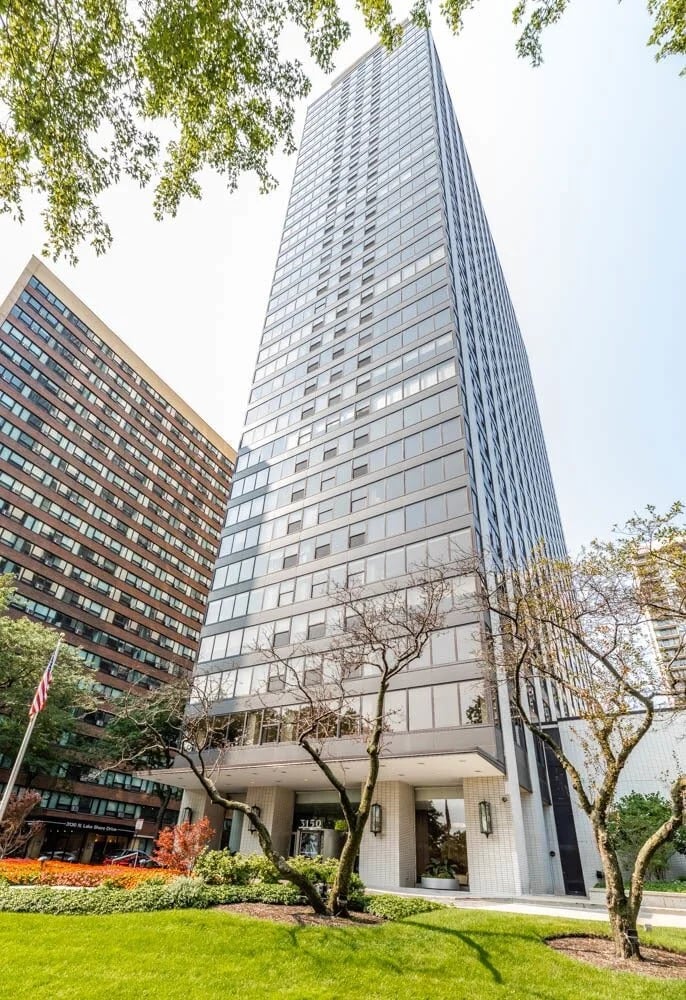
One of my favorite things to talk about at initial buyer meetings is this: when you buy a condo, the whole building is your investment. Not just your unit. First-time buyers tend to think they're purchasing everything inside their four walls, and that the roof, the masonry, the boiler, and the other owners are somebody else's problem. They're not. They're yours, proportionally, the day you close.
Or the way I usually put it: the HOA is not your landlord. You are the HOA. In a small building, that means you have a big part of the say in what does or doesn't get done. In a larger building, you're a smaller voice and you lose a lot of that control, though some people would rather be hands-off anyway, and that's okay. Either way, the renter habit of calling someone to fix it doesn't survive the closing table.
That's the lens for everything in this article. Most "condo red flags" lists treat every issue like a dealbreaker. In reality, some things that sound scary are fine, some things that sound boring will cost you tens of thousands of dollars, and the difference usually comes down to how the building has been cared for. And here's the good news up front: nearly everything in this article can be investigated before you write an offer, or during attorney review at the latest, before your contingencies expire. This isn't about scaring you away from condos. It's about knowing what questions to ask, and when. Here's how I actually evaluate buildings with my buyers, after 12+ years of doing this in Chicago.
The real red flags
These are the ones that should genuinely give you pause.
Thin reserves with nothing to show for it. Reserves are the association's savings account for building repairs. Low reserves aren't automatically bad. If the building just replaced the roof and repointed the masonry, of course the reserves are depleted, and that's arguably a good sign, because the expensive work is done. The problem is low reserves in a building that hasn't done anything. That means the money isn't there and the work is still coming.
Visible deferred maintenance. Tuckpointing that's obviously overdue, water staining in the common areas, a roof past its useful life. Buildings don't get cheaper to fix by waiting. If you can see the neglect on a showing, imagine what you can't see.
Active litigation. Lawsuits involving the association, whether it's construction defects, a contractor dispute, or owners suing each other, can make financing difficult and signal deeper problems. Ask what it's about before assuming the worst, but never ignore it.
A special assessment that's being discussed but not disclosed clearly. More on your legal protections here below, because this one has a contract solution.
Financials that create warrantability problems. This one is invisible to most buyers and it's gotten much more serious. After the high-rise collapse in Surfside, Florida, Fannie Mae and Freddie Mac started combing through condo documents far more thoroughly. A building with recent signs of water intrusion or significant deferred maintenance can be deemed non-warrantable, and non-warrantable buildings are nearly impossible to get a conventional loan for. If you can find a loan, it usually comes with a higher interest rate and a bigger down payment. High commercial square footage and low owner-occupancy can cause the same problem. This matters even if you're paying cash, because the next buyer probably isn't, and a building nobody can finance is a building that's hard to sell.
Rental restrictions that don't fit your plans. Many Chicago associations cap the number of units that can be rented, or ban rentals entirely. If the cap is already maxed out and you ever need to rent your unit instead of selling it, you can't. Rental restrictions aren't inherently bad, and heavy investor ownership creates its own problems, but you need to know the rules before you buy, not when your job transfers you to Denver.
Pet policies you didn't read. Same category, same lesson. Plenty of Chicago buildings have weight limits, breed restrictions, caps on the number of pets, or no-dog policies entirely, and buyers routinely don't check until attorney review. If you have a 75-pound dog and the building has a 25-pound limit, that's not a negotiation, that's a dealbreaker. It cuts the other way on resale, too: a strict no-pet building removes a large share of Chicago buyers from your future pool. Read the pet rules in the declaration before you fall in love with the unit.
Self-managed buildings: not a red flag, a personality test
One of the biggest misconceptions I run into is that a self-managed building is automatically a warning sign. I disagree, and I've seen too many well-run small buildings to say otherwise.
Some self-managed buildings are great. They keep costs low and things get handled. What they need is a Type A kind of person running them, someone who actually stays on top of the maintenance calendar and the finances. The risk isn't self-management itself. It's a three-unit building where all three owners bought their first condo, none of them knows how to care for a building, and everyone assumes someone else is handling it.
So here's what I tell my buyers: if you're that Type A person, consider that you might be the one who should take it over. And either way, figure out whether the association fits your personality before you buy. Some people want a low-key building where nothing much happens. Some people want an involved association with meetings and committees and a plan. Neither is wrong. Buying into one when you're wired for the other is what goes wrong.
The alternative isn't automatically better, either. I've worked with a lot of management companies in Chicago over 12 years, and I'm still waiting for one to impress me. Plenty of them cost real money, don't answer the phone, and don't do much of anything, and on top of that, you have less say in what gets done at your own building. Some owners genuinely prefer that trade. They'd rather set it and forget it and let someone else deal with it. That's a legitimate choice. Just don't assume "professionally managed" means "well managed."
Split-face block: caution, not panic
If you've shopped for condos in Lakeview, Lincoln Park, or Wicker Park, you've seen split-face block, whether you knew it or not. It's the rough-textured gray concrete block on thousands of buildings from the late-1990s and early-2000s construction boom.
The internet will tell you split-face block is a catastrophe. Here's the more accurate version: most of these buildings are fine. They wouldn't keep selling if they weren't. Some of them do have real problems, almost always related to water getting into block that wasn't sealed. Split-face block is porous, and it needs to be sealed roughly every five to seven years. That's real maintenance, but it's considerably cheaper than tuckpointing a masonry building. The horror stories come from buildings that skipped it for fifteen years.
So the question during due diligence isn't "is this building split-face block." It's "when was it last sealed, and can anyone show me proof." If the association has a sealing history, you're probably looking at a normal building with a known maintenance item. If nobody can answer the question, that tells you something too.
My own bottom line: I'd pick a brick building over a split-face block building every single time. But "avoid every split-face building in Chicago" would rule out half the inventory in some neighborhoods, and it's not necessary.
Buying into a high-rise: ask what's been done, not just what it costs
This is the section I'd read twice if you're shopping lakefront high-rises.
A huge number of Chicago high-rises were built between the 1950s and 1970s, and those buildings are now hitting the age where everything comes due at once: risers, elevators, roofs, windows. These are enormous projects, and owners are getting hit with special assessments I've seen run as high as $60,000 per unit.
My rule, and it's a personal one: I wouldn't buy into a high-rise of that era unless the major infrastructure work has already been done or is clearly budgeted and funded. Otherwise you're not wondering whether the assessment is coming. You're just wondering when, and whether you'll still own the unit when it lands.
Here's something I'm watching but can't fully prove yet: I suspect these assessments are starting to affect values in some of these buildings. If enough owners get a $60,000 bill they can't absorb, some of them will sell fast and cheap to get out, and those fire-sale closings become the comps. If you're seeing a high-rise unit priced surprisingly low, the building's capital project schedule is the first place I'd look for the reason.
Special assessments are not the end of the world
After all that, let me pull back, because I don't want you walking away thinking every special assessment is a five-alarm fire.
Buildings need maintenance and upgrades. That's not a scandal, it's ownership. If you owned a single-family home, you'd pay for the roof and the masonry and the mechanicals entirely on your own. In a condo building, you're splitting those costs with your neighbors. That's not always cheaper, because a large building has far more material to maintain than most single-family homes, but the principle is the same: as long as a special assessment isn't crippling your finances, it usually just means work that needs to get done is getting done.
The red flag isn't the existence of a special. It's the size, and what it says about the years before it.
Low HOA vs. high HOA is a philosophy, not a verdict
Related point, because buyers get this backwards constantly. Some buildings, usually smaller self-managed ones, deliberately keep monthly assessments low and deal with work as it comes, through occasional specials. Other buildings charge higher monthlies specifically so they never have to levy a special. Neither approach is wrong. It's the same personality question as self-management: do you want predictable and higher, or lower with occasional lumps?
That said, I'll be direct about very high HOAs: depending on the property, they're often money you'll never get back, and the HOA fee is the single biggest lever on your monthly payment. The math surprises people. At today's rates, spending $50,000 more on purchase price adds roughly $300 a month to your payment, spread over 30 years, building equity the whole time. An HOA that's $500 higher than a comparable unit's adds $500 a month immediately, forever, with nothing behind it. A $2,000 difference in monthly assessments, which absolutely exists between buildings in this city, is the payment equivalent of spending about $300,000 more on the home.
And here's the part that really stings: some of those high-HOA buildings still end up with special assessments anyway.
The protections built into your contract
This is the part of the process I most want buyers to understand, because it's where all of the above becomes actionable.
When you buy a condo in Illinois, reviewing and approving the condominium documents is a contingency of your purchase. You get the declaration, the bylaws, the budget, the financials, and the meeting minutes, and if what you find in them is unacceptable, you can walk away. One thing buyers get wrong about this step: your attorney typically isn't reading these documents for you. They pass them along and answer your questions. Which means the person responsible for actually reading the budget and the minutes is you, ideally with a broker who knows what to look for. Nobody catches the thin reserves or the assessment being discussed on page four of the March minutes unless someone on your side opens the file.
Critically, the seller is required to disclose special assessments that are even under discussion, not just ones that have been formally approved. That timing matters enormously. You don't want to find out about a special after it's approved and you own the unit. You want to know while the board is still talking about it, so you can decide whether to move forward at all.
As for who pays: it's standard in Chicago for sellers to cover special assessments that are already in place, and ones that come up before closing. In extremely competitive bidding situations, a buyer will occasionally offer to take on a pending special to sweeten their offer, but that's the exception, not the norm.
And read the meeting minutes. All of them, as long as they exist. Minutes tell you what work has been done, what work is being discussed, and, honestly, what the vibe of the association is and whether these people like each other. An association at war with itself is its own kind of red flag. One caveat: some small self-managed buildings don't keep formal minutes at all. That's common and not disqualifying on its own, but it means you'll need to get your answers by asking direct questions instead.
I'll tell you why I'm this insistent about the minutes. On one deal, the only trace of what became a roughly $60,000-per-unit special assessment was a brief reference buried in minutes from a meeting a year earlier. Nothing had been recorded or formally approved yet, so there was nothing obvious sitting in the disclosure paperwork. We dug through the minutes, found that one mention, and started demanding information. It took a lot of tries to get straight answers, but we finally got to the bottom of it: the work was most likely happening, and the board just hadn't finished discussing everything yet. It was put in place after that. One line in year-old minutes was the difference between knowing and finding out after closing.
What to actually do with all this
Before you write an offer on a Chicago condo, you want answers to a short list of questions: How much is in reserves, and what's been done recently? Is there any deferred maintenance you can see? Any litigation? Any special assessments in place, coming, or being discussed? If it's split-face block, when was it last sealed? If it's an older high-rise, where is the building in its capital project cycle? What are the rental and pet rules? Who runs the building, and does that setup fit you?
And here's the thing: you shouldn't have to wait for attorney review to get most of these answers. The reserve balance, recent projects, upcoming or discussed work, existing specials, and the rental percentage are all things the listing agent can and should answer before you write the offer, and plenty of it is sitting in the listing paperwork already. Attorney review is your safety net, not your first look. When I write offers with my buyers, these questions get asked up front, because the answers shape the offer itself, not just whether you stay in the deal.
None of this requires you to become a building engineer. It requires a broker who asks these questions on every deal, and a buyer willing to actually read the documents when they arrive, because your attorney will hand them to you and answer questions, but the reading is on you. That's the job, and it's one I do with my buyers on every condo purchase.
FAQs
Is a self-managed condo building a red flag in Chicago?
No. Some self-managed buildings are excellent and keep costs lower than professionally managed ones. What matters is whether someone competent is actually running it. The risk isn't self-management, it's a small building where no owner has taken responsibility for maintenance and finances.
Is split-face block bad?
Not automatically. Split-face block is everywhere in neighborhoods like Lakeview, Lincoln Park, and Wicker Park, and most of those buildings are fine. It does need to be sealed every five to seven years, so ask for the building's sealing history. Buildings that skipped that maintenance are where the problems come from. That said, I'd choose brick over split-face every single time.
How much should a Chicago condo association have in reserves?
It depends on the building, and there's no number that applies to every building type. For smaller buildings, my loose rule of thumb is roughly $1,000 per unit as an acceptable floor. That does not scale to large buildings or high-rises, which need substantially more because there's far more to maintain. Context matters, too: reserves that are low because the building just completed major projects are very different from reserves that are low because nobody's been saving.
What does a high HOA fee actually mean?
Sometimes it means the building is well-funded and avoiding special assessments. Sometimes it's just expensive. The HOA fee has the biggest impact of anything on your monthly payment, dollar for dollar, and unlike purchase price, it builds no equity. Make it justify itself: know exactly what it covers and how the building's finances look before accepting a high one.
Can I back out of a condo purchase if there's a special assessment coming?
Reviewing the condo documents is a contingency of your purchase, and sellers must disclose special assessments that are even being discussed, not just approved ones. If what you learn during that review is unacceptable, you can walk away. This is one of the most important protections in the entire condo-buying process.
Who pays a special assessment when a condo sells?
In Chicago, sellers standardly pay special assessments that are in place at the time of sale, as well as ones that arise before closing. Occasionally a buyer in a competitive bidding situation will offer to take one on, but that's rare.
What does non-warrantable mean, and why should I care?
A non-warrantable condo building is one that doesn't meet Fannie Mae and Freddie Mac's lending standards, often because of litigation, deferred maintenance, recent water intrusion, high commercial space, or low owner-occupancy. Loans in these buildings are very difficult to get, and the ones that exist come with higher rates and down payments. Even if you're a cash buyer, warrantability affects you, because it determines who can buy the unit from you later.