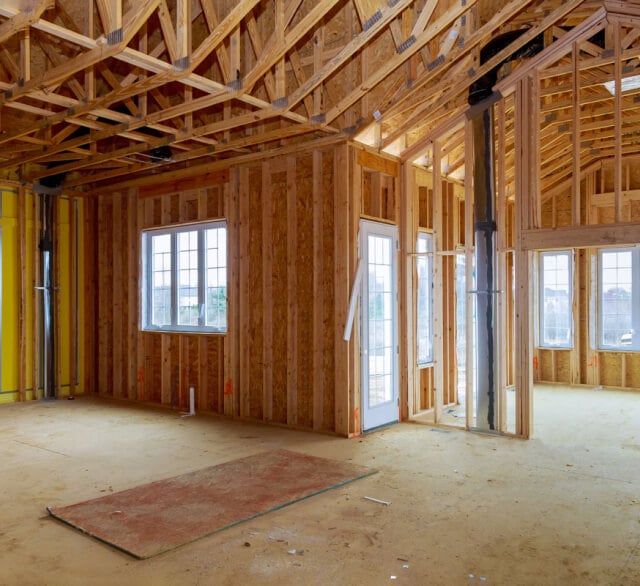
When I started this job, I don't think I realized how much time I'd spend in construction zones. It's not a successful week of showings if I didn't have to navigate a muddy pit and stairs with no railing in heels, and/or if I didn't end up covered in construction dust in my all-black outfit.
One of the first deals I ever did was a new construction purchase. I still sell a lot of it, and I like much of what's being built in Chicago right now: layouts that make sense, mechanicals you won't be replacing for years and, if you buy early enough, the chance to pick your own finishes. There is a lot of good quality new construction in this city.
The difference between new and resale usually isn't quality. It's information. A house that's 15 years old has a track record: how the roof held up through a decade of storms, what the tax bill actually is, what you can hear through the walls. New construction doesn't have that yet. You're evaluating the builder as much as the building, and some of what you'd normally see with your own eyes, you have to verify another way.
A lot of what follows I learned early in my career. Here's what I tell buyers now, before they sign anything.
Are you comfortable buying something you can't see yet?
Buying before a building is finished means buying from a floor plan, a spec sheet and the builder's word. There needs to be an element of trust involved. With a finished home, you can walk through it and see everything. With pre-construction, a lot of it has to be taken on faith, at least for a while.
That's a real source of anxiety for some people, and it's worth knowing how you'll feel about it before you start. Early in my career I worked with two buyers who found the uncertainty very hard. They wanted firm answers on details that hadn't been decided yet, and every open question made the process more stressful for them. What I learned is to set expectations at the start: which questions need answers before you sign, and which details won't be settled until later in the build.
I want buyers to ask questions. Ask about the warranty, the timeline, what's included in the price, where things will go and who the builder has used on past projects. Those answers matter before you sign. Other details, like exactly where each outlet goes, often aren't final yet, and you'll have to trust the process on those for a while.
You also don't have to buy from plans to buy new. There are three ways in:
- Pre-construction. You buy from plans and specs, and you get the most choices.
- Under construction. The structure is up, so you can walk the space and judge room sizes and light.
- Finished. You can see exactly what you're buying.
If buying something you can't see would keep you up at night, a finished new home gets you most of the benefits without the guesswork.
Picking finishes is more work than people expect
If you buy early enough to choose your own finishes, you'll be choosing a lot of them: cabinets, counters, tile, flooring, light fixtures, faucets, doorknobs, the pulls on every drawer. Each one comes with its own set of options, and they all have to work together.
Then there's the budget. Builders usually include an allowance for each category, and it's easy to fall in love with something that costs more than the allowance. Selections come with deadlines. Changes after a deadline usually mean a written change order and an extra charge, and materials with long lead times can push the schedule back.
Most buyers don't realize how time-consuming selecting finishes is until they're in the middle of it. So before we start, I ask clients two things. First, how involved do they want to be? Some people want to pick everything. Some want to choose from a short list. Some like the builder's standard package and would rather not touch it.
Second, how involved do they want me to be? I'm happy to pull options for counters, tile or light fixtures, or to stay out of it entirely. Settling this at the start keeps selections from turning into a second job.
Assume it will close late
New construction usually closes later than the builder says it will. As a newer agent, I didn't know to warn people about that. Now it's one of the first things I tell buyers.
In my experience, delays of two to four weeks are common in the city. One of my clients bought in a planned subdivision in the suburbs, and that closing ended up about four months late.
A few weeks is manageable if you plan for it. A few months can upend a lease, a move or the sale of your current home. So I build in room:
- Don't end your lease or book movers around the builder's original date.
- Ask your lender how long your rate lock lasts, what an extension costs and who pays for it.
- If you're selling a home to buy this one, keep the timelines loose. I wrote about that tradeoff in Buy First or Sell First? What I Tell Chicago Homeowners.
Check the builder before you fall for the building
The builder's track record tells you more than the model unit. Ask for references, and talk to people who bought from them before. Go see a project they finished a few years ago. Ask owners how the builder handled warranty requests after closing. That's when you find out who you're dealing with.
You can also learn a lot from small details. I look closely at the tile. Are the cuts clean? Are the grout lines even? How does the tile finish at the corners and around the tub? Tile doesn't tell you what's behind the walls. It can tell you something about the builder: whether they hire careful tradespeople, or whoever is cheapest.
Pay attention to how the deal goes before you sign, too. How quickly do you get answers? Are they straight answers? Do documents show up when they're supposed to? If something about the builder's side feels off early, take it seriously. I've had a couple of new construction deals where things were difficult from the beginning, and looking back, I wish I'd taken those early signs more seriously.
That history matters most if something goes wrong after you close. Many builders sell each project through its own company, which may not be around in a few years. Many builders offer a one-year warranty on their work, though coverage varies and it won't cover every issue you might come across.
So during attorney review, have your attorney read the written warranty closely: what it covers, what it excludes, how long it lasts and how claims get handled. Then weigh it against the builder's history. A warranty from a builder with ten good years behind them is worth more than a stronger-sounding one from a company formed for this project.
Get it inspected, and time the inspections right
A new house still needs an independent inspection. The city's code inspections check that the work meets code. They aren't a buyer's inspection, and they don't promise the house is free of defects. Good builders expect you to bring an inspector and don't push back on it.
If you're buying early enough, you can get more than one look:
- Before the drywall goes up. This is the only chance to see framing, wiring, plumbing and ductwork before the walls close. Fixes at this stage are simple.
- Before closing. A full inspection of the finished home, plus a radon test.
- At about 11 months. If your builder offers a one-year warranty, an inspection shortly before it ends lets you hand them a list while they're still on the hook.
Inspections almost always turn up items, and most are minor: a cabinet door that needs adjusting, a paint touch-up, a missing piece of trim. Signs of water getting in, wiring problems or anything structural are a different conversation, and part of my job is helping buyers tell the two apart. Anything unfinished at closing should be written down, and for bigger items, ask your attorney about holding back money at closing until the work is done.
One of the nice things about new construction is that a new home is supposed to be perfect at turnover, even cosmetically. Buyers typically get to do a "blue tape" walkthrough before closing to mark every imperfection they can find, no matter how small: a scratched floor, a ding on a cabinet, uneven light switches, you name it.
Ask how the house handles water
Chicago is hard on buildings, and most of that comes down to water. Heavy, localized storms can overload neighborhood sewers and push water back into basements through the building's own sewer line (City of Chicago). That happens to new buildings as well as old ones.
So don't assume a new basement or lower level is protected. Ask how it's set up:
- Is there an overhead sewer and ejector pit to protect the lower level from sewer backups?
- Does the sump or ejector pump have a battery or water-powered backup?
- Is the ground graded so water runs away from the foundation?
- How are windows, doors and roof decks flashed, and where does the roof deck drain?
This matters most in duplex-down condos and any home with living space below grade.
Budget for the real tax bill, not the one on the listing
The tax bill on a new construction listing is often not the bill you'll end up paying. While a house is under construction, the county assesses the land and only part of the building. The full value is added once the home is finished and fit to live in (Cook County Assessor). So the first bills can look low, and then rise sharply.
Sometimes the county misses the new house altogether. A 2025 investigation by the Chicago Tribune and Illinois Answers found the assessor's office had undervalued properties by missing new construction and major renovations. State law allows up to three years of back taxes when that's caught later, and one McKinley Park owner received a back-tax bill of more than $23,000 (Illinois Answers).
Two things protect you. First, budget on a realistic number. I pull the actual tax bills on finished new builds nearby, so clients aren't planning around what an empty lot used to cost. As a rough starting point, we usually estimate the annual tax bill at slightly over 2% of the purchase price, though the actual bill can vary quite a bit. Second, have your attorney handle taxes in the contract. With new construction, buyer and seller often sign a tax reproration agreement that recalculates the split once the real bill arrives (Illinois Department of Revenue). Ask whether it covers back taxes from before you owned the home.
Once you own it, keep an eye on the assessment. I covered how appeals work in How to Appeal Your Cook County Property Taxes.
Get the lien waivers before closing
If a builder doesn't pay a subcontractor or supplier, that company can file a lien against the house. That can follow the property even after you've bought it (source). This one is routine: your attorney and the title company should confirm final lien waivers from the builder and the trades before closing.
Some things you can't know until people move in
Early in my career, a client bought a unit in a new condo building before anyone lived there. After she closed, she told me it was awful. She could hear her neighbors talking and their dogs barking. In a building that's already occupied, we would at least have had a chance to notice that before she bought.
With pre-construction you don't get that chance, but you can get more information than a floor plan gives you:
- Ask what's between the units: the floor and wall assemblies, the acoustic insulation and any sound ratings the developer specifies.
- Visit an occupied building by the same developer and listen.
- If the building is partly occupied, talk to the people already living there.
None of that guarantees a quiet unit, but it's far better than finding out after closing.
A new condo building has a few other unknowns. The association has no history yet, so the budget is the developer's projection rather than years of actual costs. The developer also runs the association until owners elect their own board, which Illinois requires within 60 days after 75% of units are sold, or three years after the declaration is recorded, whichever comes first (Illinois Condominium Property Act, Section 18.2). And lender requirements for new buildings are stricter, so confirm early that your loan works in the building. I explained the current rules in Condo Lending Rules Just Changed, and what to look for in an association in Chicago Condo Red Flags.
Why it's still worth it
New construction in the city is scarce. Of the 1,528 new homes builders sold across the Chicago metro area in the first quarter of 2026, 1,445 were in the suburbs (Chicago Agent Magazine). That leaves fewer than 100 in Chicago itself, which is part of why a good new build in the city draws a lot of interest.
Buying new doesn't mean skipping due diligence. It changes what you check: the builder instead of the last owner's maintenance, the tax bill that's coming instead of the one on the listing.
When I walk a new build with a client, I spend less time admiring the kitchen than you might expect, and more time looking at the tile.
FAQ
Do I need a home inspection if the house is brand new? Yes. City code inspections aren't a buyer's inspection. If you can, get one before the drywall goes up, one before closing and, if your builder offers a one-year warranty, one around month 11 before it runs out.
How late do new construction closings usually run? In my experience, a few weeks late is normal. The longest I've seen was about four months, in a suburban subdivision. Plan your lease, your move and your rate lock with that in mind.
Why are property taxes on new construction so low at first? The county assesses a house under construction at only part of its value, and the full value comes later. Budget based on what finished new homes nearby actually pay, and have your attorney address back taxes in the contract.
Should I buy pre-construction or a finished new home? It depends how much you need to see before you commit. Pre-construction gives you more choices and often an earlier price. A finished home lets you inspect exactly what you're buying, and hear what the neighbors sound like.
Can I use my own agent to buy new construction? Yes. Many builders want your agent with you or registered at your first visit, so bring them in from the start.
What does a builder warranty cover in Illinois? It depends on the builder. Many are one year, with longer coverage on some systems or structure. Illinois law also gives new home buyers an implied warranty, but contracts can waive it, so have your attorney read the warranty during attorney review.