If you already own a home in Chicago and you're planning to move, one of the first things to sort out is which transaction goes first, because that decision drives your financing, your negotiating position, and how much pressure you're going to be under for the next several months.
If you can comfortably buy before you sell, I usually recommend it, and the reason is mostly about time. Not everyone can swing that financially, and that's okay — there are ways to make the other version work, and we do it all the time. But the two paths aren't equivalent, especially in this market.
Why buying first is the better position
Inventory in Chicagoland has been tight for years, and while some buyers find the right place on their first outing, plenty of people look for a year or more depending on how competitive their area is, how flexible they can be about what they want, and what's actually available in their budget. Some of it is just luck. You don't get to know in advance which kind of search you're going to have.
Now add a deadline to that. If you sell first, your timeline isn't really yours anymore — it belongs to whoever is buying your house, and depending on their financing you're usually looking at 30 to 60 days from contract to closing. Their move-in date is contractual, and most buyers using conventional owner-occupant financing are required to occupy the property within 60 days of closing, so there isn't much room to negotiate it away.
Buying first also makes your current home much easier to sell, because you can say yes to every showing request without working around your own schedule. That matters more than people expect. A home that's hard to show gets shown less, and a home that gets shown less sells for less.
An empty house is usually easier to present, too. When a home is occupied, buyers are looking at someone else's furniture and someone else's layout, and not all of them can see past it. That said, a home that shows beautifully as-is is an asset, not a liability. I always say buyers like the shiny.
What I'd push back on is the idea that you have to spend money on staging furniture. Sometimes it's worth it, but often it isn't, and a vacant home shows perfectly well without it. When I list a vacant property I usually virtually stage the photos, labeled as virtually staged in the MLS, and people sometimes assume the point of that is to trick somebody. It isn't. The photos aren't supposed to look real — they're there to show what a room could look like furnished and how the space might be laid out, because a lot of buyers genuinely can't picture that on their own.
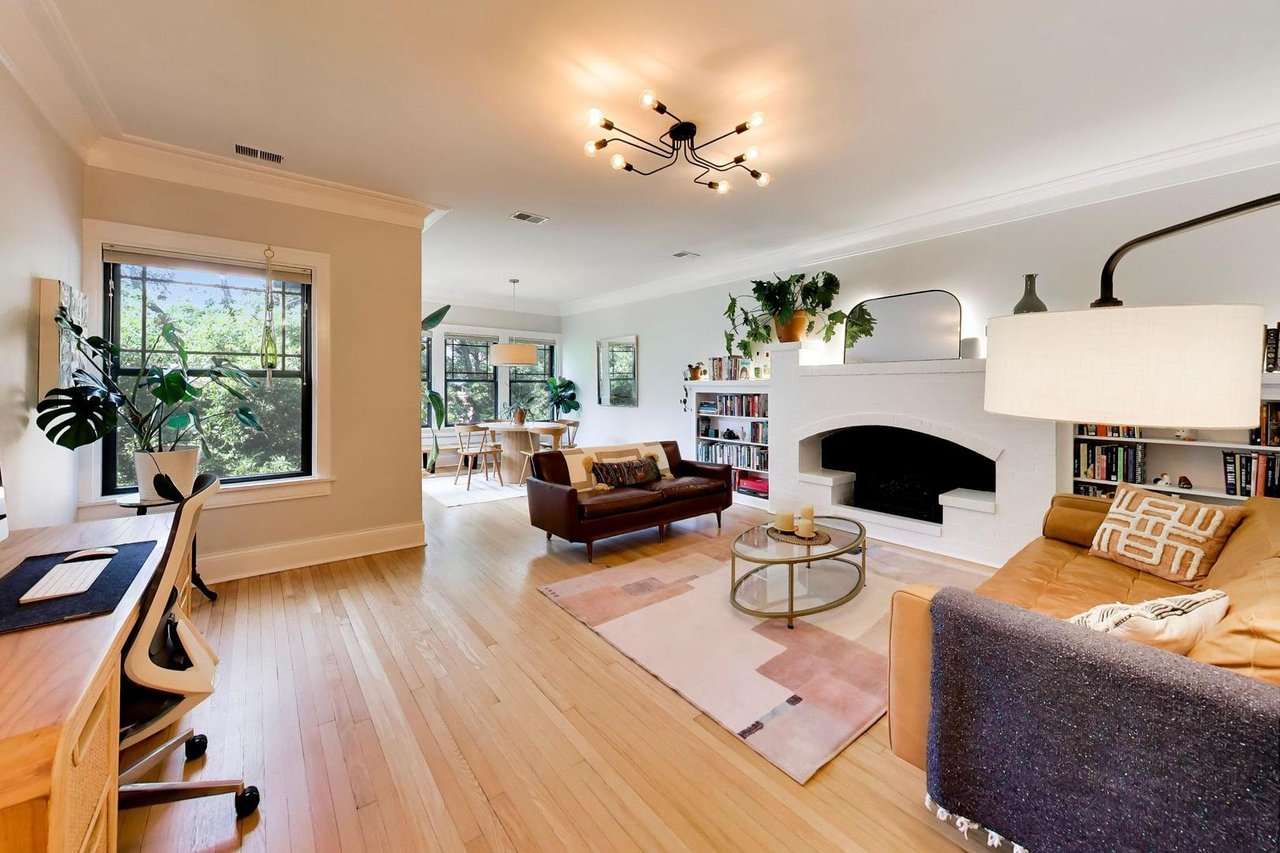
There's a third option people don't think about, which is shooting the listing photos before you move out, while your own furniture is still in place. We do this fairly often, and it gets you both things: the home sells vacant, so it's easy to show, but the photos show it lived in and full. The catch is that you have to decide before the moving truck comes, and you have to be honest about it. If your place shows well furnished, shoot it furnished. If it doesn't, wait until it's empty and stage the photos instead.
How people actually afford to buy first
Whether any of the above applies to you comes down to how you'd pay for it. The usual routes:
- Cash reserves. The simplest version, and the least common.
- Qualifying while carrying both mortgages. Your lender underwrites you for the new loan while you're still on the hook for the old one. Whether this works comes down to your income and debt ratios.
- A HELOC on your current home. Pull equity out for the down payment, then pay it off when the sale closes. Usually the cheapest of these options on rate, though it's variable, and some lenders charge a fee if you close the line within the first couple of years — which is exactly what you'd be doing. The catch is timing: many lenders won't open a line on a home that's already listed, and approval takes weeks. This is a before-you-list move or it isn't an option at all.
- A bridge loan. Short-term financing secured by your current home, typically six to twelve months with a balloon payment at the end. It solves the timing problem but replaces it with a repayment deadline, which puts you back on a clock to sell. Rates typically run a few points above a 30-year fixed, closing costs are commonly 1.5% to 3% of the loan amount, and most large banks don't offer them at all — you'll be looking at credit unions, regional banks and specialty lenders. Treat this as the fallback, not the plan.
- Recasting. After your old home sells, you apply the proceeds to the new mortgage's principal and your lender recalculates the payment on the remaining balance. Same rate, same term, lower payment. Not every loan allows it. Ask before you close, not after.
Your lender will tell you which of these you actually qualify for, so don't build a plan around one until they have.
Buying first doesn't mean buying recklessly. Before you commit to anything, get a realistic sale price range for your current home from somebody who will tell you the truth, add up what it actually costs to carry both properties, and figure out how many months you could do that without it starting to affect the price you'd be willing to accept. If the honest answer is two months, you're not really in a buy-first position — you're in a buy-first position with a hidden deadline.
And the carrying cost is more than two mortgage payments. It's two tax bills, two insurance policies, two sets of utilities, and any assessment on top of that. Insurance is the one people forget: a lot of homeowner policies limit coverage on a property that's been sitting vacant past 30 or 60 days, so call your agent before the house is empty rather than after. Leave the heat on through the winter, too.
If you have to sell first
If you do have to sell first, I recommend we ask your buyer for post-closing possession, which most people call a rent-back. You close, you get your money, and then you stay in the home as a tenant for an agreed period while you look for your next place.
Sixty days is the practical ceiling, since conventional owner-occupant financing generally requires the buyer to be living in the property by then and anything longer has to be cleared with their lender. It's also not the default — plenty of buyers will agree to 30 days, or to nothing at all.
And if you do get 60, don't plan to use all of it, because a rent-back with your move-out scheduled for day 59 leaves you no room for a closing that slips or a moving company that reschedules on you.
The terms matter as much as the length. There's usually a daily rate and a security deposit or an escrow holdback for damage, and you want to be clear up front about who's paying utilities, who handles repairs during the term, and whose insurance is covering what. Your attorney will review and formalize all of it, but you should understand what you're agreeing to before it gets there.
Here's the part most sellers don't see coming. A paid rent-back is usually priced off the buyer's carrying cost rather than yours, meaning their mortgage, taxes and insurance on a higher purchase price at today's rate. If you've owned your condo for years at a lower rate and a lower assessed value, the daily rate to stay in your own home can end up being two or three times what you were paying to live there last month.
This is why a free rent-back is one of the more effective things a buyer can put on the table in a multiple-offer situation. If the seller needs time to move, that flexibility can matter more to them than a higher number on the contract.
It isn't actually free for the buyer, of course. They're still carrying the taxes, insurance and any assessment, and they can't move in until possession ends. What it does do is make the first stretch easier on their cash flow. When you buy a home you pay your down payment, closing costs and prepaid interest at closing, and then you don't make a regular mortgage payment on the first of the following month — your first payment is due on the first of the month after that. Interest is accruing the whole time, so it isn't a free month of ownership, but nothing is coming out of your account either.
And because most conventional owner-occupant financing requires the buyer to occupy within 60 days regardless, they're giving up time inside a window they couldn't have extended much further anyway.
I had a seller close on her condo recently with a rent-back in place. We were close to the 60 days and down to the wire, we didn't think she'd find a place before the expiration and it was getting stressful. With 3 weeks left we found a vacant condo. My amazing lender was able to close the loan in time for her to move in with only 2 days in between when she needed to vacate her place and the closing day of the new place. Luckily she was able to stay with her partner for the two days in between, so it worked out, but without much room to spare. It's a good argument for why vacant homes are so attractive to buyers who are on a clock — which, if you sold first, is you.
Can you just make your offer contingent on selling?
In my experience, contingent offers are extremely difficult to get accepted here, and it's worth understanding why, because there are two versions of this and they're treated very differently.
A home-sale contingency is where your current home either isn't listed yet or is listed with no buyer. I have never seen one accepted here. You'd be asking a seller to take their home off the market with no idea whether you're ever going to be in a position to close.
A home-close contingency is where you're already under contract with a buyer and just haven't closed yet. That's a real contract with a real date on it, so it's far more credible, but it still usually goes nowhere unless the seller has some reason to need a contract right now.
If you're going to submit one and want to be taken seriously at all, you generally need to be past your inspection period, or better yet have a clear-to-close from your buyer's lender. Anything earlier than that and you're asking a seller to bet on a deal that can still fall apart in three different places.
What about closing both on the same day?
People ask about this because they did it the last time they moved: sell in the morning, buy in the afternoon, wire the proceeds across.
I haven't done one since before the pandemic. When I started they were fairly common, and that's because it was more of a buyer's market — there was more inventory and buyers had enough leverage to negotiate the timing they needed.
The problem now isn't that two closings can't be coordinated. It's that a seller doesn't have to accommodate a buyer whose closing depends on another sale happening first, so they generally don't.
The other option is the one nobody likes, which is to sell, move into a rental, and then buy with no deadline at all. It's two moves and probably a storage unit, and lease terms rarely line up neatly with a home search. But it takes the contingency problem off the table completely and puts you in about the strongest position a buyer can be in — no home to sell, nothing to coordinate — and I've had clients who were much happier doing it that way than they expected to be.
If you're weighing the timing on any of this, fall is a good stretch to move in either direction, because there's still real inventory out there but the casual traffic has thinned out on both sides. It can also be a smart time to buy your next place while fall inventory is still decent, and then have your current home ready to hit the market in spring.
I've written more about how fall compares to spring in Chicago if you want the longer version.
FAQ
Can I afford to buy before I sell my Chicago home?
That depends on your income, your equity, and what your lender will approve. The usual routes are cash reserves, qualifying while carrying both mortgages, a HELOC on your current home, or a bridge loan. Talk to a lender before you start looking, and before you list, because a HELOC in particular usually isn't available once your home is on the market.
What is post-closing possession, and what does it cost?
It's an agreement to stay in your home as a tenant after you've sold it — you close, you're paid, and you rent the property back from your buyer for an agreed number of days. The rate is usually based on the buyer's carrying cost rather than what you'd been paying, so it can be higher than people expect. Most buyers can't go past 60 days, because their financing requires them to occupy the home by then.
Do I need to stage my home to sell it?
Not necessarily. Staging furniture is expensive, and for most homes it isn't the difference between selling and not selling. A vacant home shows fine, and virtual staging in the photos does most of the work. If your home already shows well furnished, the other option is shooting the listing photos before you move out.
Will a seller accept my offer if it's contingent on selling my home?
A home-sale contingency, where you don't have a buyer yet, is effectively a non-starter here. A home-close contingency, where you're under contract and waiting to close, has a chance, but usually only if you're past inspection or clear to close and the seller has a reason to want a contract now.